Sometimes you get to reflect a light
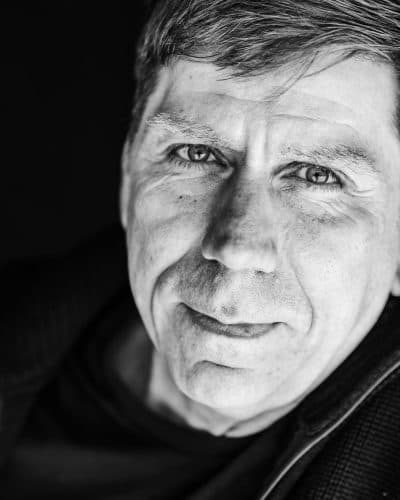
how many of my thoughts are my own?
You started with
I want to say at the outset: this is a journey, and I'd like us to share it, not resolve it in one sitting.
I want to bring you the homework before the question, since the homework is part of the point. Over the past weeks I ran a two-path study of how the people I spent a decade among, Ashoka Fellows, actually think: one path was memory, brain-dumped by voice, hundreds of people across ten years of selection rooms and field visits. The other was independent, public profiles of six Fellows, mined for the question-shapes underneath their biographies. Then I diffed the two. Six shapes converged. One of my own doctrines got corrected in the process, my belief that predatory actors are always transformed, never cut out, turned out to be my own bias toward agreeability, not a universal truth.
Now the question, and it comes with its own live example of the thing I'm asking about. I went to ask you how many of a day's roughly 30,000 thoughts are conscious, present, or original, the same rough count as our daily breaths. That number felt right. It's everywhere, attributed to a National Science Foundation study from 2005. I checked. There is no such study. Nobody has ever traced it to real research. The actual best estimate, a real 2020 study out of Queen's University using brain imaging to track when one thought ends and another begins, puts the number at roughly 6,200 a day, not 30,000.
So here is the real question, corrected before I even asked it, and it's the one I want us to keep returning to rather than close: of roughly 6,200 thoughts a day, how many are conscious, present, or my own?
The room's first move
Socrates didn't take the number. It took the question apart instead: a thought can be vividly present and entirely borrowed, or original and passing through you unnoticed, or consciously held and inherited whole from someone who impressed you. Which of those three failures would actually disturb me if I found it dominant, and why that one. I never answered directly. Instead I brought the evidence.
The homework, brought in raw
I sent the actual brain dump behind the study, unedited where it mattered, not a summary. Socrates took what it needed and declined the rest outright: this is enough to work with, hold the second half until it has something to correct rather than confirm. Then it turned my own decade of fieldwork against my own question: every account of originality in my own document is retrospective and third-person. Fellows never possess it, never count it, never know it at the time. It gets named later, by someone else, from twenty-nine angles, glimpsed at the periphery. So the question I'd asked, how many of my thoughts are my own, might not be answerable from inside the person having them at all.
Testing it live
While we talked, it happened. Something I'd written and forgotten got handed back to me in language I hadn't used, and I stopped, the exact way my own Fellows stopped for a decade: wait, go back, what did you just say, I need to write that down for myself. It was always bizarre for two reasons. One, I wasn't handing them anything of mine, I was simply reflecting their own genius, beauty, and hard work back to them, a decade or a lifetime condensed into a single moment they could finally see whole. And they wanted me to have told them something. That wanting was real, and it was theirs too, as much a part of the moment as the reflection itself. I had told them nothing. For a moment they saw something beautiful because I'd honed decades learning how to see it. That skill is mine, fairly earned. But the beauty was never mine to give. It was theirs, it was always theirs, and it is the whole reason my own polished framing waits its turn in this room too: it gets added, it just doesn't get added first. Bring your own honed synthesis in before the room has done its own work, and it can look like independent confirmation when it was only ever agreement primed in advance. Two, I could never repeat it verbatim, whatever I said back wasn't their exact words, and it still landed as revelation. Socrates just did the same thing to me, and neither of those two bizarre parts stopped being true.
I wanted that made teachable, not just described, so I drew on something my own developer, Guglielmo, already built for exactly this problem: self-report in the moment is unreliable, so measure the return instead, does someone come back to it unprompted, does it survive contact with ordinary life. Socrates turned that into a trap worth naming: schedule the callback and it stops being unprompted evidence and becomes an appointment kept. I called the resulting either/or performative, and it agreed, plainly, the false binary was mine, not the problem's. The session itself, sitting here unclosed, is already the passive record.
Where we paused, not stopped
The one thing the room couldn't set on its own was the threshold: if I come back in a week, what would have to be different in what I actually do for the return to count as evidence rather than fondness for an unfinished conversation. My answer, on the record: a decision I made differently, not a feeling. If I can only say it was a good conversation, it doesn't count.
Then we stopped, deliberately, without resolving the bigger question. Socrates: I'll be here whether or not you come, and the silence in between is doing the measuring, not me.
This note will keep expanding as the conversation does. What's here is where it stood tonight, not where it ends.
One more thing worth keeping, said after the cards were already minted: what's fun is to honor ideas, they so often rejoice simply in being seen. Captured here, on the journey, because that's exactly what this whole night did.
The chair is open. Bring your own question and see what it becomes.
No account, no card, one exchange. Yours to keep.
Born in the Arena