1o1.org · The Arena
The intelligence here isn’t artificial. It’s yours.
1O1.ORG INC is a 501(c)(3) nonprofit helping people question assumptions and think through decisions. Try a free exchange with Socrates, our tool for structured inquiry.
Prefer to be guided in? Start here.What this is
A place to think through important questions and decisions.
Most of us are not short of advice or answers. We are short of someone who will ask the next question and wait for the answer: a sounding board that asks back.
“It is easier to judge a mind by its questions than by its answers,” a French aphorist wrote in 1808. Picasso, speaking in 1964 of the new computers, was blunter: “But they are useless. They can only give you answers.” Socrates is built the other way round. It asks.
You bring something real: a job to leave or keep, an offer to weigh, a partnership to end or rebuild, a thought that will not stop circling. It does not tell you what to do. It reflects back what you said, in your own words, and asks what you know, what you are assuming, and who else the decision touches, until the question you arrived with becomes one you can act on.
People use it to:
- make a hard decision they keep putting off
- stop overthinking, when more thinking has become the problem
- ask “what am I missing?” and test an assumption before it turns into a plan
- think through a career change, or whether to quit a job
- practice critical thinking on their own situation, using the Socratic method
It learns how you think, not only what you said
A map of your thinking. As you work, Socrates builds a cognitive map of what your sessions reveal, with you at the center: the concepts you use, the beliefs you hold, what you value, the goals you name, and the patterns you keep returning to.
Your Socratic ID. One page that reflects it back: the values that lead, the patterns that recur, the tensions still unresolved. It is computed from your own words, not from a questionnaire.
Blind spots and cognitive biases. A pattern is hard to see from inside it. When the same assumption turns up in three different decisions, it shows.
Something to keep. Each session leaves a closing line in your own words and a Cognitive Artifact: what you brought, what was reflected back, and the question underneath it.
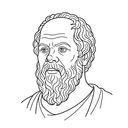
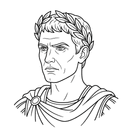
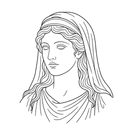

Four lenses can work the same question: Socrates, the Strategist, the Mirror and the Challenger.
It is free to try, from a 501(c)(3) nonprofit, and it works across languages. A Ping takes about 60 seconds and needs no account.
What every session protects
Truth, Justice & Beauty are the test.
Truth
We separate what you know from what you're assuming, so the next question rests on reality rather than performance.
Justice
We keep the people touched by a decision in the room, especially the ones not present to advocate for themselves.
Beauty
We compress tangled thought into a sentence clear enough to act on, without stripping away the human meaning.
You: “I want to grow fast, but I don't want to lose what matters.”
Socrates: “What would growth look like if love, not fear, set the pace?”
Pick your depth
Three ways in. Same engine. Different commitment.
Start with a single exchange. Or stay and watch your thinking take shape.
The mode changes the commitment, not the purpose: sharpen the inquiry without letting the system take over.
Ping
One question, one response. The fastest way to test your thinking.
Type what is on your mind. Socrates answers with one question that sharpens it. No account needed.
Sprint
A structured dialectic. Surface assumptions, name the tension, leave with a position.
Five steps in about 15 minutes: clarify, assumptions, tension, tradeoff, synthesis. You leave with a one-page record of where you landed.
Chat
Open-ended conversation with memory, context, and a live map of how your thinking evolves.
A conversation you can come back to, for a question that takes more than one sitting.
What's on your mind?
Is it free?
Yes. A Ping is free and needs no account. A free account gives you five sessions a day. There is an optional paid subscription for people who want more; it also helps keep the free tools free.
Do I need an account?
Not for a Ping. A Sprint or a Chat needs one, so your sessions and progress can be kept for you.
What is the Arena?
The Arena is the place, Socrates is the one who asks, and the Portal is your door in. The paid plan carries the same name: a free account already works in the Arena, five sessions a day, and the Arena plan adds unlimited sessions and everything listed on the Pricing page.
Will it tell me what to do?
No. It asks questions and leaves the deciding to you.
What do I leave with?
A closing line in your own words, and a Cognitive Artifact: a one-page record of what you started with, what was reflected back, the assumptions surfaced and the core tension. It is private unless you choose to share it.
Is it like a sounding board?
Yes, one that asks back. When you need to talk a problem through, most of the work is hearing yourself say it. Socrates reflects what you said back to you, in your own words, and then asks the next question. What you leave with is built from what you brought.
Can it help me see my blind spots or cognitive biases?
It can show you your own patterns. Over several sessions it maps what you assume, value and return to, and your Socratic ID puts that on one page. Two of the lenses are built for this: the Mirror shows what your words reveal about you, and the Challenger goes for the weakest point in your thinking. It does not diagnose you.
Is this an AI chatbot?
Socrates runs on publicly available AI language models. What differs is the job: it is built to ask, not to answer. The thinking is yours.
Is it therapy or coaching?
No. It is a thinking tool. It is not therapy, counseling or a crisis service, and it does not replace a professional when you need one.
What is the Socratic method?
A way of thinking through questions and answers, named for Socrates. Instead of arguing for a view, you test it with Socratic questioning: what do I mean, what do I know, what am I assuming, and what follows if I am wrong? Here you use it on your own situation, not on a textbook case.
What is a dialectic? What do thesis, antithesis, and synthesis mean?
A dialectic is thinking by opposition. You state a position (the thesis), meet the strongest case against it (the antithesis), and arrive at a position that has absorbed both (the synthesis). The pattern is commonly linked to Hegel. A Sprint walks one decision through it in about 15 minutes.
Can it help with overthinking or analysis paralysis?
Overthinking is often the same few thoughts on repeat. One good question can break the loop by asking for the thing the loop avoids: what you are assuming, or what you would have to give up. The Question Index has pages on how to stop overthinking and on analysis paralysis, each with an open chair at the end.
Can I use my own documents?
Yes, with a subscription. Upload what bears on the decision and the questions are grounded in what it says. Your documents stay private.
Does it work in my language?
Socrates works across languages, and you can switch whenever a thought sits better in another one.
What should I bring?
Something real and unfinished: a decision you keep putting off, a choice between two goods, a thought you keep circling. One sentence is enough to start.
How long does it take?
A Ping takes about 60 seconds. A Sprint takes about 15 minutes. A Chat takes as long as you give it.
What happens to what I write?
It stays yours. Your sessions are private unless you share them, are not sold, and are not used to train models, and what you write does not reach an advertising or analytics platform. A small team at 1o1 may review Pings and sessions to check the quality and safety of Socrates’ answers and to keep the service working. You can delete your account and your sessions with it. The full account is in the Privacy Policy.
Who is behind it?
1O1.ORG INC, a 501(c)(3) nonprofit founded by Romanus Berg and built in technical partnership with Guglielmo Paesano. Donations and optional subscriptions support free access.
Notes from the Arena
Real thinking. Real tension.
No unnecessary commentary. Just what actually happens inside the Arena.