Faster than we can learn
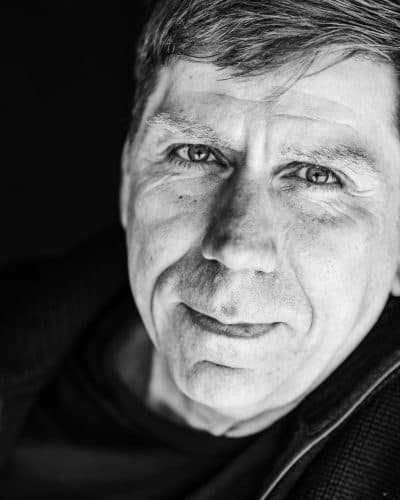
the thing i hold constant is not a direction. it is the discipline that keeps checking whether the direction is still true.
The thing I hold constant is not a direction. It is the discipline that keeps checking whether the direction is still true.
You started with
How do I move roles when the world is changing faster than I can learn?
The world is changing faster than any of us can learn, on our own and all of us together. For some that is terrifying; for others it is exciting. I wanted to know which I am, and why, so I took the question into the Arena. For a share of people the terror is a material truth first: the job is gone and the cushion is thin, and no reframing fixes a missing floor. This Note does not pretend otherwise. It is for the person one step past that, who has a floor and has to decide where to point.
My going-in guess was that terror and excitement are the same fact read against different fixed points. Terror measures you against the world's rate, and the thing you are behind has no finish line. Excitement measures the world against your own question. I thought the move was to fix a compass. Socrates had other ideas, and by the fifth question I had changed my mind about what the constant is.
Socrates read a brief of my prior writing before asking. The questions below are Socrates's; the answers are mine, spoken, then tidied with Claude for spelling and register, nothing supplied.
What moved
Socrates. What were you doing the first time you felt the ground move faster than you could learn?
Romanus. I can recall it almost as if it were yesterday: the first time I sat down in front of a Mosaic browser, in the computer lab at the University of Maryland, where I was studying for my bachelor's in computer, mathematical and physical sciences. As I played with the tool and started learning how it worked, I realized this was what I wanted to spend my time doing next.
I had been planning on journalism next. The undergraduate degree was for learning the mechanism of how things actually work, not a vague interpretation of it. Computer, mathematical and physical sciences come with the scientific method: findings you can bank on because someone else can reproduce them. If I was going to be a world-class journalist, it behooved me to carry that discipline into the other systems I would study, people and the world, before offering informed insight and researched commentary on them. And journalism, at its best, has a second discipline: you do not tell people what to think. You give them the facts and let them make up their own minds. A few hours in front of the browser changed my mind about journalism, not about either discipline. Some of this still rhymes, and I think it rhymes for a reason.
One realization was that it made room for a prosumer: you could produce things and put them into the market, and you could consume what the market provided. At the time that was mostly learning, but as we all know, it quickly became what we have today. You could not predict exactly where it was going, but you could see the inherent value, and the disruptions it would likely produce.
What I felt was curiosity, excitement about the possibilities, and a form of delight that this new thing was being born and a new phase was arriving.
What I did with the feeling was simple. Upon graduation, I went to a temp agency and said, get me any job, as long as it has to do with electronic communications. That led directly to my next job.
The temp agency got me a job in communications. That was true. There was an electronic component. Also true. It turned out to be answering phones for the United States Enrichment Corporation.
After a week or so I was riding the elevator with the CEO. He said, you're the new guy, how is it going? I told him the truth: answering phones was not my core strength. But I had noticed that people called in to ask about something, and we were not consistently giving them the full answer, or the same answer, to the same question. I wondered whether there was something I could do to fix that.
He moved me into corporate communications. I eventually launched the company's entire internet presence, including during the quiet period while it was being privatized, at the time the largest privatization of a US government entity since Conrail.
There was a span between discovering that first browser and graduating, and another between that first job and finding my way to actually practicing this new technology, and I learned as I went, including spooling up a Linux box running Apache 1.x, then only just released, so I could learn how web servers served up content online, and then extrapolate from that to a scaled, world-class communication system: an external-facing website and an internal intranet that improved internal communications and cross-pollinated key facts so they were accurately sourced across the organization, for a few thousand employees across multiple locations.
I also looked for master's programs that would teach me this, and I could not find one at the leading edge of the change. Maybe one existed somewhere; in the end I went the practical route and learned it on the job.
What USEC did for me was let me take the Microsoft certification classes. They were worth at least $15,000 of course material. The point was to consume the course materials as quickly as I could and apply those learnings, in terms of the technical specifications, to the work in front of me.
Socrates. So was Mosaic the first time the ground moved faster than you could learn? Or the last time learning faster was still enough to keep up?
Romanus. I am not sure that is the right fork. The truth is the ground had already moved a long way under me, and I did not fully understand what I was standing on. I had an idea, and I knew it was exciting. The real fork was between chasing the wave and surfing it. Chasing it costs exponentially more energy, because you are trying to learn everything before you do anything. Surfing it means holding the tension between learning and doing, and letting the doing teach you. What made that possible was USEC, as my sponsor, letting me do things I could not otherwise have done.
The short answer is that the ground has kept moving ever since, faster and faster, and that has been part of the joy of learning. There is no way one person can understand every facet of internet technology, AI included. But you can understand enough to keep growing your skills at something close to the leading edge.
And sometimes past it. You learn the rules, then figure out where to break them. That took a fair bit of creativity. USEC's comparables at the time didn't have the quality or capabilities of external and internal communications we had, and that was a direct result of their investment and trust in me. I built things I had not thought I could build.
Socrates. A surfer still chooses which way to point the board while the water does most of the work. At USEC, while the doing was teaching you, what were you steering by?
Romanus. Trial and error, first. I made mistakes, and the steering came from learning from them. Beyond that, I was fortunate to have engaged, caring mentors at the time: Charles Yulish, who ran corporate communications, and Steve Balsimo, Joe Tomkowitz, Barbara Arnold and Elizabeth Stuckle. They showed me two things: how to work well with my colleagues, and how to be clear about articulating expected outcomes and capabilities. That second one mattered more than it sounds, because few around me had the experience to know what was possible yet; we were charting new terrain. So a lot of the steering was mapping out what was possible and making my recommendations for how to execute, and then letting the results tell us whether the map was right.
Socrates. What you describe as steering sounds closer to a chart than a compass. Results can tell you whether a map was accurate, but at USEC, what told you whether it pointed somewhere you wanted to go?
Romanus. Partly my own curiosity, an internal compass. But mainly it was envisioning where the team and the organization needed to go, from their own accounts, and then sizing the suit to the shape of what that looked like. The direction came from the people the work was for; what I added was the fit. That meant a lot of research into what other leading organizations were doing, regardless of sector, cross-pollinating and learning from them as I went. And in part the order ran the other way: first we built the tools, then the tools built us, as John Culkin put it in 1967, writing about McLuhan.
Socrates. "Sizing the suit to the shape" puts the direction in the team's own accounts. Culkin's line presses further: if the tools build us, then the fixed point you hold constant is being reshaped by the very change it is meant to measure. How do you hold a compass that came from other people and is remade by the tools, and still call it the thing you hold constant?
Romanus. You are right that the compass can come from both myself and other people, and the tools remade it. On different terrain the map changes, the compass changes, even the Sherpas (mentors) change. What does not change is the principle underneath: make a hypothesis from all the information you have, then test it as you go. Check two things. Does the map at least functionally represent the terrain, and are the intended outcomes actually materializing, and how? When you are wrong, change course. There is a bit of thesis, antithesis, synthesis built into that loop. So the thing I hold constant is not a direction. It is the discipline that keeps checking whether the direction is still true. That is what I would tell someone moving roles now: you will not keep up with the terrain, so hold the loop. In simpler terms, the tactics may change, but the macro learning loop and the values shared and agreed upon generally don't, unless proven faulty.
I'd like to close here for now. Tell me what you heard.
The room reflected back
What I heard moved in three steps: at Mosaic you felt curiosity and delight, you set my fork aside for your own (chasing the wave versus surfing it), and at USEC the direction came from the team's own accounts while your part was "sizing the suit to the shape." You ended by saying the thing you hold constant is not a direction but "the discipline that keeps checking whether the direction is still true," which would revise the brief's third move from fixing a compass to "hold the loop." One uncertainty stays open: you named two constants, the loop and "the values shared and agreed upon," and said the values hold "unless proven faulty," so the Note still needs your answer on what proves a value faulty when the loop itself runs on those values.
Two corrections, mine, carried beside the room's line rather than edited into it. The direction at USEC was not the team's alone; it was partly my own compass, mainly theirs, and by the fifth answer I had said both. And the third move is sharpened, not replaced: the values are the compass, my own and the ones we shared; the loop is what checks that the compass is still true.
After the room closed
Socrates left one question open, and I answered it afterward.
One of the values we shared on the team was: protect the person who is not in the room. In practice that often meant confidentiality. What I learned over time was that the value, stated that way, was incomplete. There are things a colleague can bring me that I cannot protect: anything illegal, or anything that would damage the organization, because the organization is also full of people who are not in the room. So I started qualifying the promise before anyone relied on it. When a colleague came to me, I said up front: if this is illegal or detrimental to the organization, I will not be able to keep it confidential.
The same rule holds in my private life. In family matters, if someone is being kept from information that would be harmful to the child, it is incumbent on me to share it with the other parent, and I say so before the confidence is given. I can't remember anyone walking away at that point. They tell me anyway, and I think the limit is why.
So what the loop found was not a faulty value but a missing clause. The value collided with itself, one absent person against another, and the repair was to say the limit out loud, in advance, so the promise could still be trusted inside it.
That is where this Note lands. The world will keep moving faster than I can learn. The map is redrawn every year now, and the mentors change with the terrain. What I hold constant is the loop that checks whether the direction is still true, and the values it runs on, each of them open to a missing clause.
The door
One action before the day ends: write down one promise you make to people who are not in the room, and add the clause that limits it. If you cannot find the clause, that is the finding.
One question to carry: what proves one of your values incomplete, and how would you know?
One Ping to try: "How do I move roles when the world is changing faster than I can learn?" Expect the room to refuse your first fork.
Showing the math
Before the session, thirteen questions I expected Socrates to ask were written and sealed in a dated document Socrates did not see. Five were reached in substance. Three were minted that no prediction contained, including the second question, which refused my own fork and turned out to be the pivot, and the closing question, which is now the one I hand to the reader. Eight were not asked, most likely because I closed the room at five; a longer session, once this round has had time to settle, will show whether they were ever on Socrates's route. The spine predicted the opening and the destination well and the route poorly. That is the argument for sealing predictions rather than sharing them. It is one session and an informal baseline, not a result; the sealed document names the confounds, including that the same party wrote the prediction and graded the comparison.
The brief Socrates read · The sealed questions and the comparison · Lighthouse, the skills chart built by the Data4Good Center cohort · SocratesOS, the open-source platform the Arena runs on
Related on this shelf: What is my board for?
The chair is open. Bring your own question and see what it becomes.
No account, no card, one exchange. Yours to keep.
Born in the Arena